
OpenVPN List
OpenVPN maintains quality by testing every public server at minute-level intervals, listing only those that meet our performance and reliability standards.
Picking an OpenVPN server
Choose servers that show recent checks and low response times to improve reliability. For everyday browsing prefer geographically closer servers to reduce latency. If you need a specific region for testing or content access, select the matching country but expect higher response times for distant nodes.
Before connecting: download the .ovpn, inspect it briefly for any notes or custom ports, and import into your client. If your ISP blocks typical VPN ports, try switching UDP/TCP settings in the client or select a server using a commonly open port (443). Always verify connection status and IP after connecting.
Latest Blog Posts

Residential vs. Datacenter Proxies: What...
When we learn about proxies, we face a key choice. A proxy is like a middleman that connects our devices to the internet...
Admin
February 23, 2026

Python Web Scraping Tutorial: Rotating P...
We’re here to guide you through using rotating proxies in Python web scraping. Our aim is to help developers, data...
Admin
February 23, 2026

Using Proxies with Selenium for Automate...
We use proxies, especially rotating ones, to boost Selenium-driven automated browser testing. This is key for high-volum...
Admin
February 23, 2026
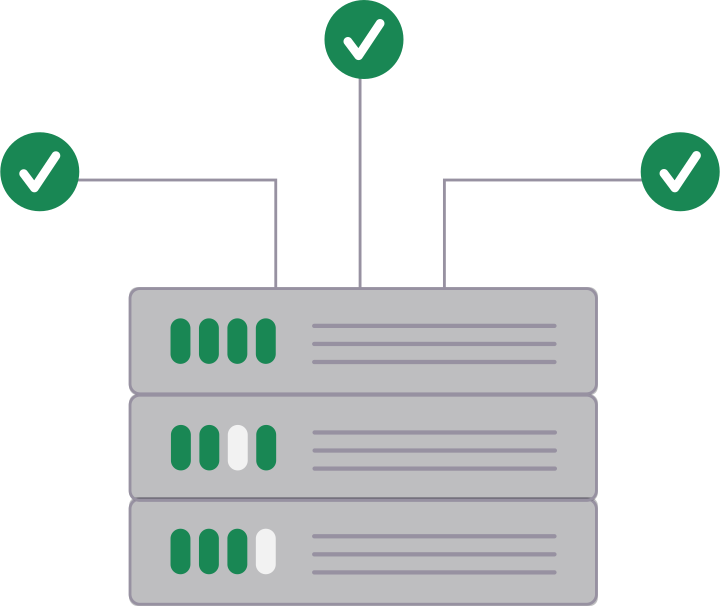
Always Fresh & Verified
Our system automatically checks and updates every node within minutes, ensuring you only see active, high-speed servers with zero downtime.

Realtime testing
Uptime monitoring
Performance verification